The Field of Honor: Column by Barbara Presnell
The Field of Honor
The Field of Honor, in Asheboro, NC, began in 2016 and features as many as 500 US flags mounted on 7 ½ foot white flagstaffs. Each is dedicated to a person who has made a difference in the lives of others, including veterans, active-duty military personnel, first responders, teachers, coaches, pastors, parents, grandparents, and community leaders. Organized by the Asheboro Rotary Club and the Asheboro/Randolph Chamber of Commerce, the display is visible from Highway 64 at the South Asheboro Middle School Field and will be on display until the closing ceremony at 12:00 pm on Veteran’s Day. Davidson Local columnist Barbara Presnell delivered the following keynote address at the opening ceremony on Saturday, November 7.
I am pleased and quite honored to be asked by the Field of Honor committee to speak today. To be honest, I was a little surprised. I’m not a dignitary or public speaker or politician. I did grow up down the street from the mayor, so that might count for something.
My family on both sides has lived in this community for as long as there has been a community. We include prominent Quaker families and a lot of Methodists. My grandfather was a blacksmith with a shop in downtown Asheboro, and when he died at age 77, the Asheboro Courier called him “one of Asheboro’s oldest citizens.” My other grandfather lied about his age to join the National Guard at age 17, and by the time he was 20, he was a decorated veteran and proud owner of the Coca-Cola Bottling plant in Randleman, which he ran for the next 18 years. Every one of his 87 years was in service to this community and this country.
My father was a 1935 graduate of Asheboro High School back when only 25% of students received their diplomas. His post-secondary degree was earned on the fields of France, Belgium, and Germany, and later, in the t-shirt business back home. My mother was a Randleman High School grad, but she gave many of her best years to AHS, in the guidance office and the typing classroom. I too graduated from Asheboro High School, but when I left for college, I had no plans to return.
As life would have it, I did return, over and over. While I don’t live here now, I understand deeply all that this place has given me, and all that the people here, including my family, have given me. Roots do run deep. Like that crepe myrtle in your side yard, even when you cut the tree to the ground, those sprouts keep coming up from the stump that remains.
I grew up to be a writer and, as such, I turned my gaze back on the place where I was born and raised, and that has made all the difference.
Every flag in this field today flies for someone like me—someone who at one time called this place home. It might be a veteran who sacrificed all, or it might be a parent or child or teacher who made a difference to someone and may not have ever known.
The Field of Honor is NOT just Veteran’s Day—a day set aside to honor ALL who have served our country. And it is NOT Memorial Day—a day which remembers all who have died, whether military or family. In many ways, the Field of Honor is a sort of Thanksgiving Day, set aside for gratitude and remembrance, honor, and support for those living and those gone. There is no other day like it. I am proof, you are proof, and every flag in the field is proof.
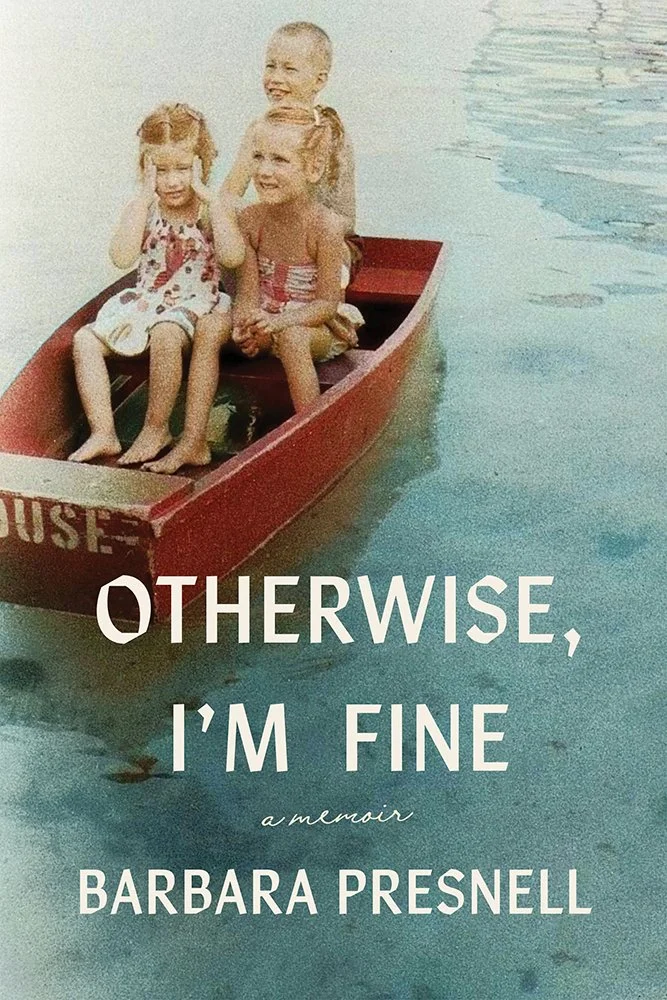
I have never been a student of history, which is most often taught through a political lens, and I admit that I was absolutely bored as a child when I heard my father’s and grandfather’s war stories. But when wars become personal, history comes to life. For me, it began with my work with Rhinoleap Theatre on the stage play, “Company K: From Asheboro to the Fields of France”; then continued with my sibling journey through Normandy to Germany, as described in Otherwise, I’m Fine. It’s when war tells stories of real people, not just generals and battlefields, that our history matters, because it tells our story.
When my brother, sister, and I stood, first on the sand at Fox Red in Omaha Beach, later on Hill 314 in Mortain, France, in the village of Malmedy, Belgium, and, finally, on the bank of the Elbe River in Magdeburg, Germany, something changed in all three of us. War was no longer facts and dates in history books. It was real lives, real people, and a country that for us and for our ancestors would never go back to what it was.
Our sacrifices have been great. Over 1.1 million Americans have lost their lives in war in the 250 years of our history. That’s 1.1 million men and women who never came home, never raised families, never ran a business, never held a grandchild.
140,000 of those Americans are buried in one of the 26 cemeteries in 17 countries overseen by the American Battle Monuments Commission. Over 94,000 US soldiers, buried at sea, missing in action, or unidentified are also memorialized in those sacred spaces.
My favorite cemetery—if one can have a favorite—is the 57-acre Henri Chappelle American Cemetery in Hombourg, Belgium, where 8,000 American soldiers who lost their lives in the Battle of the Bulge are buried. It sits on a solemn hill in the quiet countryside, with the greenest grass and bluest sky I may have ever seen against row after row of stark white stones.
Among those buried there is Lt. Colonel Paul McCollum, who was a beloved leader of men in the 120th regiment of the 30th Infantry Division during World War II. Paul McCollum grew up in High Point and was killed by a German sniper along the Wurm River in Belgium when he went out one night to check the company’s position. He left behind a new wife but no children. My brother has adopted his grave, which means that every Memorial Day and every Veteran’s Day, flowers of gratitude and remembrance are placed on McCollum’s grave.
More than 16.1 million Americans served in the armed forces during the Second World War, and over 400,000 died. From the Revolutionary War through the conflict in Iran, more than 43 million Americans have served in the military, including both Union and Confederate forces during the Civil War. Around 17 million veterans live in the US today, including around 670,000 in North Carolina, making ours the 4th largest home state for living veterans in the US.
Around 14.5% of US veterans, something like 2.5 million, have experienced PTSD. And, it’s difficult to get an accurate number, but it’s believed that veterans make up close to 33,000 homeless individuals in the US, including 750 in North Carolina. These are men and women who once wore our country’s uniform and now don’t have a place to call home.
But history lives not only with our military veterans, for we are a country much greater than our wars, no matter how much we have been shaped by them. We are a country built by strong families from all traditions, nurtured by men and women working in garages or kitchens, classrooms, or factories.
I have chosen with my flags this year to honor my grandmothers. Hannah Sharpe Presnell, born just after the Civil War, was a 5-time Blue Star mother, with 2 sons fighting in World War I and 3 sons in World War II. Miraculously, all five came home, though one suffered from his experience for the rest of his life.
My other grandmother, Wanda Robbins Bunting, was the wife of a World War I soldier and the mother-in-law of three from World War II. But more importantly, she embraced life with her strong arms using all the energy she had, all the way to her 96th year. This included hundreds of babies and children she cuddled in her years as a pediatric nurse. She could give orders like a sergeant, but I will never forget her wide open laughter, high-pitched and a little warbly, but a laugh that would bring tears to her eyes, and, infectiously, to the eyes of everyone around her.
My grandmothers’ lives made me who I am. It took my whole life to understand that, but now I cherish it and embrace it daily.
Every flag in this field tells a story, and each story contains both sadness and great love. Collectively, they are our story, the story of Asheboro, then and now, and to come.
We won’t forget them—the veterans, those who came home and those that did not; the parents and grandparents; the teachers, ministers, even strangers that have made a difference.
They are who we are. It’s our duty and our privilege to keep their stories alive.