Survey shows Lexington residents want more amenities, senior housing and affordable options
Early results from the City of Lexington’s housing needs survey show residents want home options, expanded senior housing options and better access to amenities — while also raising deeper concerns about affordability, aging housing stock and accessibility for people with disabilities.
The survey findings were presented by Jesse Day, Regional Planning Director with the Piedmont Triad Regional Council, during a recent public meeting as part of Lexington’s comprehensive planning process.
City officials began outreach in the fall through open houses, focus groups, pop-up events and surveys distributed at businesses and locations throughout the city. To date, the effort has included direct conversations with 55 individuals, 240 responses from Lexington residents and approximately 172 responses from residents outside the city limits. A separate business survey has received 16 responses.
Officials said they hope to reach more participants and plan to keep the survey open through the weekend, particularly in an effort to gather additional feedback from the business community.
Early results from the City of Lexington’s housing needs survey show residents want home options, expanded senior housing options and better access to amenities — while also raising deeper concerns about affordability, aging housing stock and accessibility for people with disabilities.
The survey findings were presented by Jesse Day, Regional Planning Director with the Piedmont Triad Regional Council, during a recent public meeting as part of Lexington’s comprehensive planning process.
City officials began outreach in the fall through open houses, focus groups, pop-up events and surveys distributed at businesses and locations throughout the city. To date, the effort has included direct conversations with 55 individuals, 240 responses from Lexington residents and approximately 172 responses from residents outside the city limits. A separate business survey has received 16 responses.
Officials said they hope to reach more participants and plan to keep the survey open through the weekend, particularly in an effort to gather additional feedback from the business community.
What residents say is needed
When asked what type of housing is most needed, both city and county respondents ranked single-family owned homes as the top priority and a concern for added traffic.
For Lexington residents, senior assisted living ranked second, followed by multi-family apartments. Day noted that nearly 60 percent of Lexington residents are renters, which may help explain the demand for additional apartment options within the city.
For county respondents, tiny homes ranked second, followed by senior assisted living.
Survey participants across Davidson County were also asked what amenities they want near new housing such as parks and places to walk. Inside city limits, convenience and grocery access ranked highest. County respondents placed parks and trails at the top. Other common responses included sidewalks, schools, restaurants, transit access and a feeling of safety.
Affordability and housing gaps
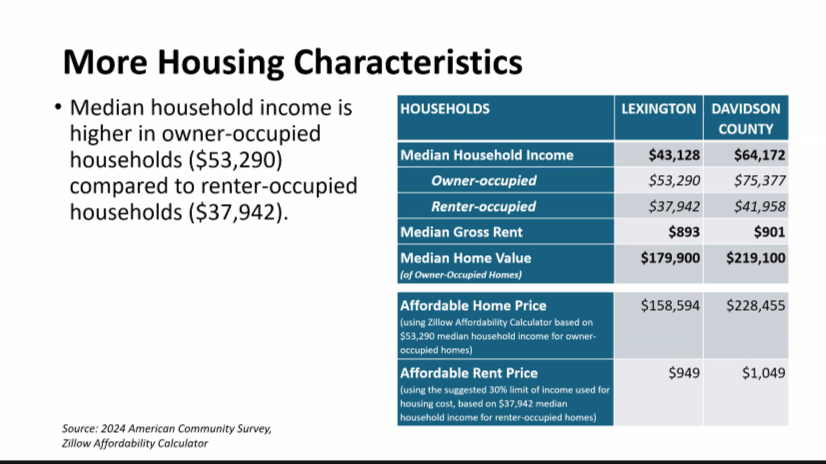
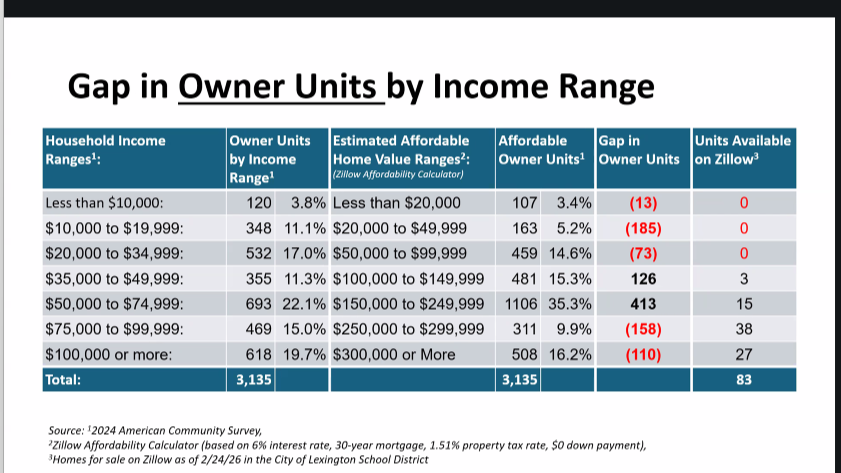
Much of the meeting discussion centered on affordability. Data shared during the presentation highlighted the Housing and Transportation Index, U.S. Census data and Zillow market data to help identify housing needs and affordability trends. While the discussion of housing affordability often focuses on the need for subsidized housing for families, participants expressed surprise at the lack of housing options for those in higher-income brackets.
The Housing and Transportation Index, a national benchmark tool, measures whether housing costs remain within recommended affordability thresholds when combined with transportation expenses. Officials explained that housing is generally considered affordable when it does not exceed 30 percent of household income. When housing and transportation costs are combined, the commonly referenced threshold is 45 percent.
According to the data presented, Lexington averages about 41 percent for combined housing and transportation costs, placing the city under that 45 percent benchmark. Davidson County overall was slightly above the threshold.
Zillow affordability calculators and American Community Survey data were also used to compare median rents, home values and household income ranges. Those figures revealed gaps in housing availability across several income brackets — particularly in lower income and higher income categories — limiting mobility and choice for residents who may need to move.
Questions raised during the meeting reflected concern about whether limited higher-end housing options could create pressure on middle-income housing and whether lower-income residents face limited options if they try to relocate within the city.
Aging housing stock and accessibility
Another recurring theme was Lexington’s aging housing stock. Only about 4.7 percent of the city’s housing has been built since 2010, meaning much of the inventory predates modern building standards.
City leaders outlined draft goals aimed at supporting rehabilitation of older homes, including partnerships with nonprofits, potential grant opportunities and educational workshops to help long-time homeowners preserve properties and maintain clear title.
Accessibility also emerged as a key issue beyond senior living. While senior housing ranked high in survey responses, participants emphasized the need for housing access for people with disabilities at all stages of life. Discussion included the importance of single-level homes, ramps, ADA-accessible features and neighborhood design elements such as sidewalks and curb cuts that support mobility.
Attendees also noted the prevalence of multi-generational households, where accessibility benefits families caring for aging parents, children or relatives with disabilities.
Draft housing goals
As part of the housing chapter of the comprehensive plan, officials outlined several draft goals, including:
Increasing housing options in new development
Supporting programs that address older housing stock
Leveraging underutilized land for housing
Encouraging residential uses on third floors in Uptown
Encouraging housing in the Depot District
Reducing costs and improving quality for affordable rental units
Streamlining development approval processes
Supporting historic neighborhood preservation
.
What’s next
Officials noted that many of the questions and comments during the meeting will be taken into consideration. Survey feedback will help shape recommendations to City Council later this spring.
The next public meeting will be held on Thursday at 5:30 p.m. at the Robbins Recreation Center, where residents can continue to provide input in person.
The housing survey will remain open through the weekend. City leaders are encouraging residents and business owners across Lexington and Davidson County to participate before it closes.
More information about the Housing Needs Survey, including meeting details, data and how to participate, can be found on the City of Lexington’s website at: https://www.lexingtonnc.gov/government/departments/business-community-development/housing-needs-survey/