Davidson County Commissioners Vote to Remove Flock Cameras Following Public Concerns
Davidson County commissioners voted Monday to end the county’s use of Flock Safety automated license plate recognition cameras, reversing course less than two years after commissioners approved the budget with the technology for the Davidson County Sheriff’s Office. Across the nation residents have been removing the cameras illegally.
The Aug. 24 decision followed public concerns about privacy, surveillance and the collection of vehicle-location data, while Sheriff Richie Simmons defended the cameras as an important tool for locating missing people, stolen vehicles and suspects wanted for serious crimes.
During the meeting, commissioners also discussed how quickly the cameras could be removed and what should happen to funding designated for the program.
The decision represents a significant change from the county’s original position.
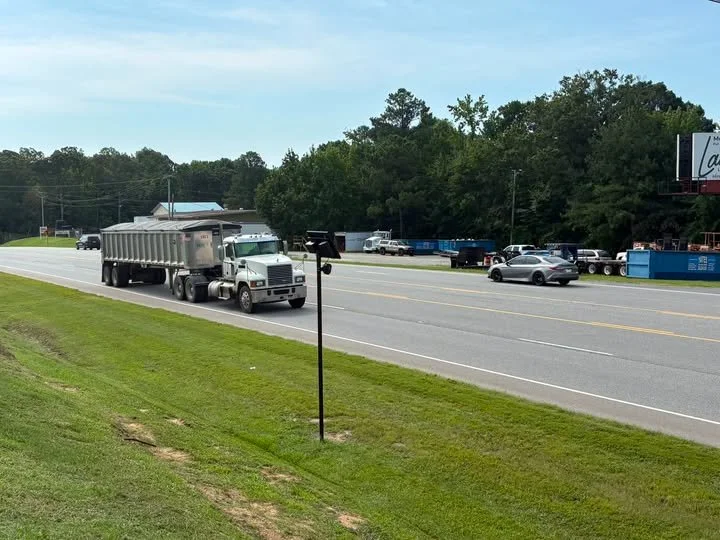
On Oct. 14, 2024, the Davidson County Board of Commissioners unanimously approved the Sheriff’s Office request to purchase 25 Flock Safety traffic and license plate recognition cameras. Twenty-three were intended for strategic locations throughout Davidson County and two were portable. Commissioners Todd Yates, Steve Shell, Chris Elliott, Karen Watford, James Shores and Matt Mizell voted in favor. Commissioner Fred McClure was absent.
The first-year cost was approximately $90,750, including equipment, installation and subscription costs. The initial purchase was funded through federal forfeiture funds, which the Sheriff’s Office said resulted in no cost to county taxpayers. Future costs were estimated at $76,000 annually, with funding to be included in the Sheriff’s Office budget request and ultimately approved by commissioners.
Public concerns brought cameras back before commissioners
The cameras returned to the forefront following concerns from Davidson County residents about privacy and constitutional protections.
At the Aug. 10 commissioners meeting, residents addressed the board about automatic license plate readers. Some argued the program violated residents’ Fourth Amendment rights and asked for the cameras to be removed by January 2027 and what residents could do to bring the matter to a vote.
Those concerns centered on questions extending beyond whether the cameras had been useful to law enforcement. Opponents questioned how much information government should collect about the movements of people who are not suspected of committing crimes and how that information could potentially be accessed or shared.
The Sheriff’s Office maintains that the cameras photograph information visible from public roadways, including license plates, vehicle characteristics, the location of the camera and the date and time a vehicle passes. The department said the cameras are not facial-recognition devices and do not collect information from cellphones or other electronic devices.
Ahead of Monday’s vote, Simmons publicly defended the technology and shared the potential public-safety consequences of removing it but ultimately said that he would support the will of the commissioners.
The Sheriff’s Office said Flock cameras have assisted investigators in recovering stolen property, locating stolen vehicles and missing people, apprehending suspects wanted for serious offenses and developing leads in major criminal investigations, including homicide cases.
The department cited several recent investigations in support of the program.
According to the Sheriff’s Office, Flock technology was used during an investigation that led to an Aug. 13 arrest involving the sexual assault of a 4-year-old child. The department also cited the March 27 arrest of a person wanted for murder in Georgia after a Flock camera alerted law enforcement that the vehicle was in Davidson County.
“Criminals do not stop at city, county or state lines, and law enforcement must have the ability to investigate crimes efficiently across those same boundaries,” Simmons said. “Flock cameras are one tool that helps our deputies and detectives develop leads and locate vehicles associated with serious crimes. They do not replace good police work, and they do not replace the Constitution.”
Before commissioners took up the issue, Simmons said eliminating the cameras would remove what he considered a valuable investigative resource.
“This will remove a very important tool from the Davidson County Sheriff’s Office if the Commissioners vote to remove the Flock Camera Program that could aid our agency in locating a missing child, person or violent criminal,” Simmons said. “I would be very disappointed in our commissioners, if they decide to remove this valuable resource from our agency.”
Several commissioners previously voted for Flock
The county’s voting history adds another layer to Monday’s decision.
Five members of the current Board of Commissioners were part of the board that approved the cameras in 2024: Yates, Shell, Elliott, Watford and Mizell. All five voted for the original program.
Shores also voted for the cameras but is no longer on the board. McClure, who remains a commissioner, was absent from the 2024 vote. Tripp Kester was not a member of the board when the original vote occurred.
The Sheriff’s Office has emphasized that the cameras were not installed without public governmental review. The Sheriff’s Office has also attempted to address concerns about potential misuse.
According to the department, access to its Flock system is restricted to authorized supervisors and detectives. The system includes auditing capabilities allowing searches and use of the technology to be reviewed. The Sheriff’s Office said internal audits have not identified misuse by its personnel.
The department also said personnel with access to the system receive training and that the Sheriff’s Office maintains a policy governing its Flock program.
Opponents have argued that safeguards against misuse do not resolve the larger concern over government collection of vehicle-location information in the first place.
The competing positions placed commissioners between the Sheriff’s Office’s documented use of the technology in criminal investigations and residents who view widespread license plate monitoring as an unacceptable expansion of government surveillance.
State moves in opposite direction
Davidson County’s decision also comes as North Carolina has expanded statutory authority for automatic license plate reader technology.
The 2026 state budget made the SBI and NCDOT automatic license plate reader program permanent, allowing agreements concerning ALPR systems within state-owned rights-of-way and establishing reporting and oversight requirements.
According to information provided by the Davidson County Sheriff’s Office, Davidson County House Representatives Larry Potts and Sam Watford and Davidson-Davie County Sen. Steve Jarvis voted for the state budget containing the ALPR provisions.
That creates a notable contrast: while state lawmakers representing Davidson County supported legislation allowing continued use of automatic license plate reader technology, Davidson County commissioners have chosen to move away from the county program.
Monday’s decision brings the local debate full circle. Commissioners who approved the technology in 2024 were asked in 2026 to reconsider whether its law-enforcement benefits outweighed residents’ concerns about privacy and surveillance.
With the vote decided, attention now turns to how quickly the cameras will come down, how the existing contract will be handled and where money previously designated for the program will be reassigned. Davidson County Commissioners Vote to Remove Flock Cameras Following Public Concerns.