Always Writing: An Invitation to Poets After Jaki Shelton Green’s Visit
There are moments in journalism when you are reminded that the work is not just about publishing, it is about listening.
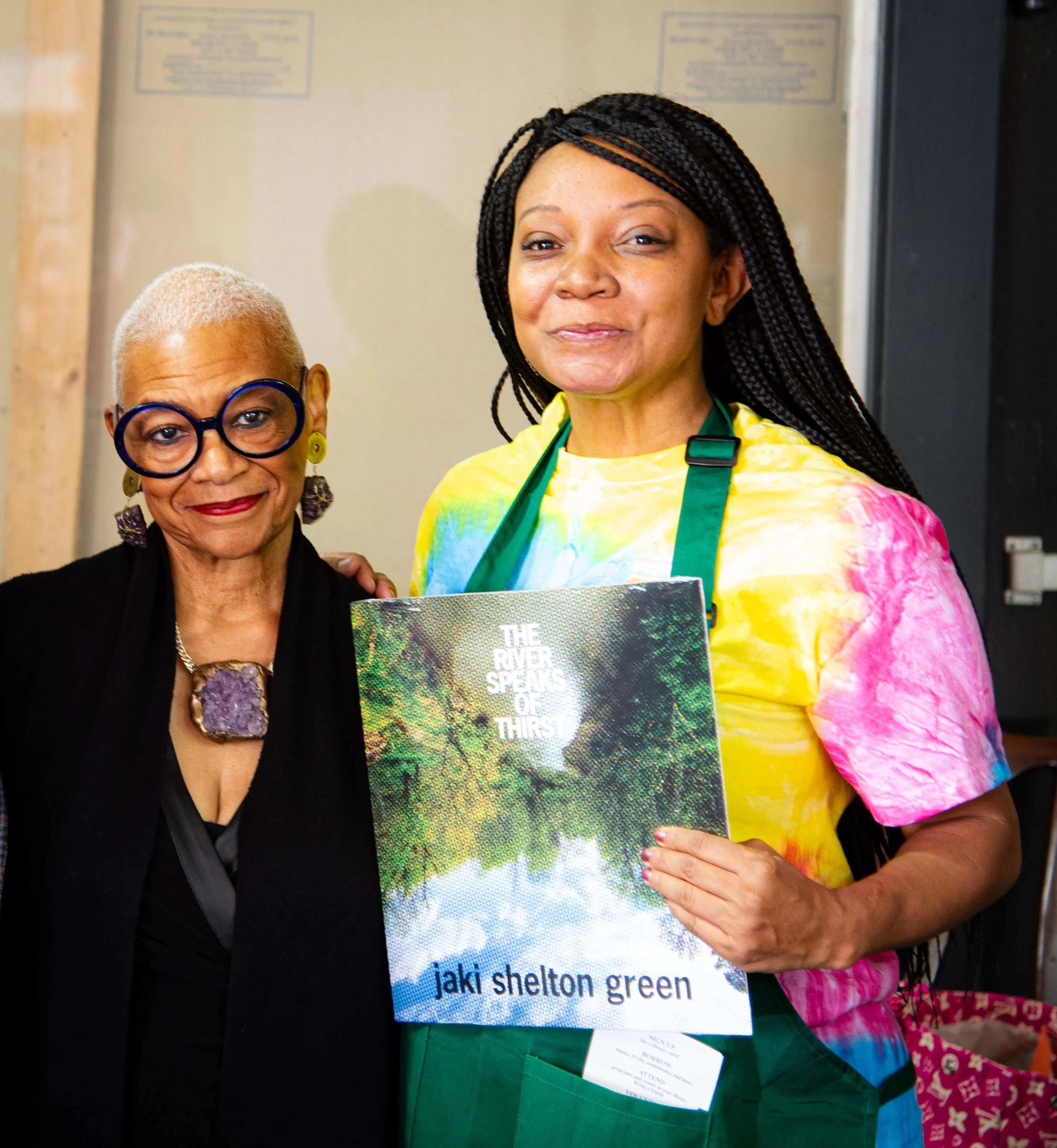
At the Lexington Book Festival, I had the opportunity to sit in on a conversation facilitated by Rene Smith with North Carolina Poet Laureate Jaki Shelton Green. What unfolded was not just a discussion about poetry, it was a reflection on voice, discipline, and the responsibility of telling our own stories.
Before I share more, I want to acknowledge something clearly. I previously referred to Jaki Shelton Green as the former Poet Laureate. That was incorrect. She is the current Poet Laureate of North Carolina and has served in that role for eight years. I apologize for that mistake and for not giving her the accurate recognition she deserves.
And in a conversation centered on truth-telling, that matters.
Smith opened space for a conversation that allowed Shelton Green to speak not just as a poet, but as someone deeply rooted in the act of storytelling. Early on, Shelton Green challenged a common idea that many writers carry.
“I don’t believe in writer’s block,” she said. “We’re always writing. We’re just not writing it down.”
That idea lingered. For those of us who work on deadlines, who push stories out daily, it reframes the pressure. The story is already there, it is the act of capturing it that becomes the work.
Shelton Green also spoke candidly about discipline and structure, something that often gets lost in conversations about creativity.
“I’m very disciplined… good time management,” she said. “Deadlines really don’t intimidate me.”
It was a reminder that even in art, there is structure. Even in poetry, there is practice.
As she described her role, Shelton Green offered insight into how the Poet Laureate position works in North Carolina, from nomination to appointment.
“The selection committee… sends three names to the governor,” she explained. “Governor Cooper appointed me in 2018, then reappointed me in 2020.”
Her work since then has been rooted not in performance, but in connection.
“My work plan… was to travel the state and to work with communities and citizens to think about the importance of telling their own stories,” she said.
That line, more than anything, felt like a bridge between poetry and journalism.
At Davidson Local, we often ask people to submit stories. But sitting there, listening, it became clear that what we are really asking is something deeper. We are asking people to trust us with pieces of themselves.
Shelton Green made it clear that poetry is not about entertainment.
“I don’t entertain,” she said. “I share my stories… and I like for people to talk back to me and say, I know that story.”
That exchange, that recognition, is where connection happens.
When asked how she would describe her poetry, Shelton Green didn’t hesitate.
“I would say truth,” she said.
Truth as a foundation. Truth as a practice.
She spoke about her influences, her commitment to reading broadly, and her deep respect for storytelling traditions across cultures. From desert poets who carried stories across regions to memories of women gathering on wash day, storytelling, she reminded us, has always been communal.
“Monday was wash day… and all the women in the neighborhood did their wash,” she said, recalling how storytelling lived in those shared spaces.
It was never just about the words on a page. It was about the voices in a room.
I also left with something tangible, a vinyl poetry CD that now sounds perfect spinning on my Victrola record player. There was something fitting about that, hearing poetry the way it was meant to be carried, through sound, through rhythm, through presence.
Next month is National Poetry Month, and the timing of this conversation feels especially important. It is a reminder that poetry is not separate from our daily lives, it is woven into them. It lives in our communities, in our memories, and in the stories we choose to share.
Toward the end, Shelton Green spoke about the work that has mattered most to her.
“What has been most important to me is working with people who are marginalized writers,” she said.
That, too, is a reminder.
For those of us building platforms, curating stories, and asking for submissions, the responsibility is not just to publish. It is to create space for voices that are often unheard.
So this is an invitation.
To the poets, the storytellers, the ones who think their words may not fit neatly into a headline or a traditional format, there is space here.
Because as Shelton Green reminded us, the story is already within you.
You are already writing it.