Barbara Presnell: Why AI Will Not Be the End of Life as We Know It
Opinion
Barbara Presnell
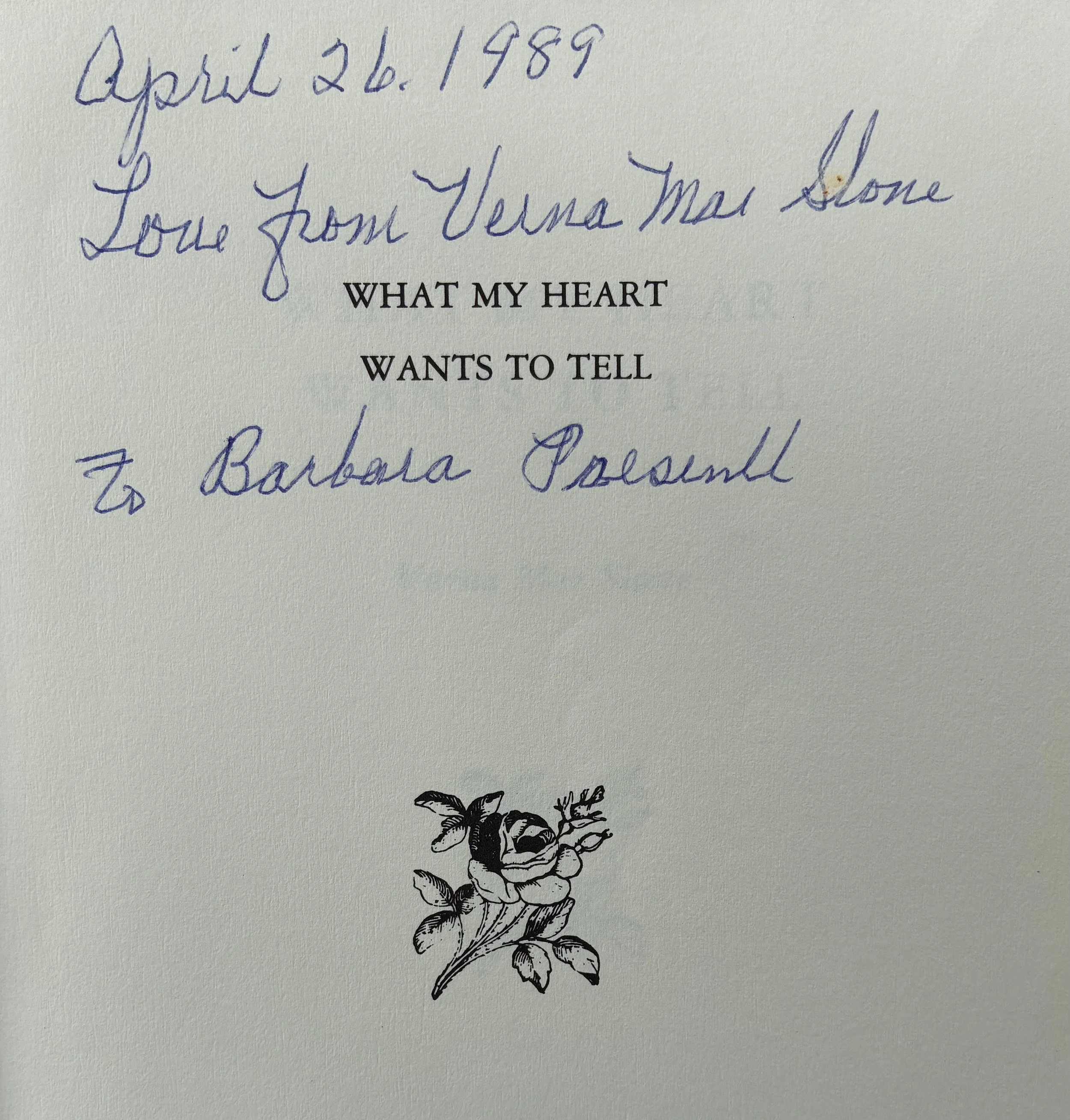
In 1979, a Kentucky mountain woman, wife, mother, and grandmother wrote a book called What My Heart Wants to Tell, a collection of memories and truths from her long life that she wanted to pass on to the next generation. In her introduction she wrote, “I hope my brain can say to my hand what my heart wants to tell.”
I've quoted that line so many times, in every writing class I've ever taught and way too many conversations and dinner table discussions. They are etched near the front of my brain, and they are tattooed on that soft fist of my heart. More and more slowly, my arthritic hands write and rewrite words, trying to get them right, trying to speak what my heart wants to tell. I try again.
My intention was—is—to write this June column about AI, artificial intelligence, which is the latest thing to interrupt our analog worlds and make life harder while making it easier.
Remember the Internet? I planned to ask. It will take over, we said at the time. It will replace human jobs, it will usurp our brains, our curiosity, our independence. In some sectors, higher education English departments being one, people refused to embrace it.
"Give us our typewriters," they said.
I remember the first time a colleague called me into his office to show me this new thing called email. He typed a quick message to his girlfriend in another state. We waited a few minutes, and her answer arrived. I was amazed, and afraid.
What will come next?
Would I have responded similarly if I'd been alive when Alexander Graham Bell actually spoke through a line to a voice that was not in the room with him? It will change things, they probably said, taking our jobs, usurping our brains, on and on. They could not imagine wires stretching across our land, cell and satellite towers, drones, or data centers.
Some might argue that so much is lost: jobs, brains, humanity, independence. We can't get our children, let alone ourselves, to put down phones and have real conversations. We've lost the art of handwriting, even with hands that are decades from arthritis.
But God, whatever God you worship, gave us brains. And God expected us to use them. God gave us the gifts of curiosity and invention, and God is happiest when we use them.
But what's next? I hear people say, "If we let AI in, where will it stop?"
First, there is no "if." AI is in.
And where will it stop? It won't stop. That fact is the essence of life. We don't go back. We don't stop. We don't say, "Okay, we've progressed enough now."
Imagine what is yet to be learned, to be discovered, to be introduced into our daily lives. Most of us won't see it, but our children will, and their children will.
Some will abuse it to start wars, to try to dominate, to make billions of dollars, to spread lies. Those abusers will abuse the best of the best. Others will use it to cure diseases, to save our environment, to add quality to our lives.
As progress is not new, "artificial" is not new. Already we have artificial flowers, artificial limbs, cake mixes, robots, turf, indoor lighting, and air conditioning. "Artificial" comprises a huge part of our modern lives.
By definition, you might argue, as I did, that "artificial" and "fake" are the same thing, meaning "not real."
Today we have fake news, fake politicians, fake images, fake boobs, fake smiles, fake hair. It has been a long, long time since we knew what was real and what was not.
But as my husband points out, there is a connotative difference: "artificial" is a replacement; "fake" is intended to deceive.
Daily I talk to my AI watch, which I call "Coach," because it asked me to. It tells me how I feel each day based on my numbers. It tells me how hard I exercise and scolds me if I drink too much wine.
Last week, it told me vacuuming is not real work.
I snapped back, "Then I'll go outside and pound some rocks. Would you like that better?"
My watch, with no emotion and not even a smile, simply said, "You can do that if you'd like to, Barbara."
And again last week, when my friend Pat Boswell died after a life struggle of almost a week, Coach asked what was driving my stress that day.
"My friend died," I told my watch.
I got no sympathy. I got no hug.
What I got was, "Then, tomorrow I recommend light yoga."
That is why I've been thinking again about Verna Mae Slone. Her words, said long before the Internet, cell phones, and AI, but after she'd lived through two wars, the Great Depression, a lot of life and a lot of death, assure me that we are all right, we humans.
There is still so much to learn, to explore, to invent, to love, and to lose. Change is also part of the human story.
What will not change is this:
The engine that drives our lives is the human heart.
We can't live without it. My dear friend Pat's heart failed her in the end, as all of ours eventually will. In life, it never failed.
In life, Pat's heart was that hug, that smile, those tears, the gifts of caring, of sharing, of touch, of pain, even anger, even sorrow.
Artificial does not feel the pain of loss or love or lingering illness. It does not bless marriages. It does not stay up at night with sick children. It does not complain about wet dog kisses or mud tracked in the house or grief.
"Go do yoga," it says, because it can't embrace.
Until scientists and innovators can replicate the human heart, and I do not believe they ever will, because some things will always come from a higher power, humanity will thrive.
What our hearts want to tell is that a spirit within us will keep us alive and will take us peacefully and lovingly, with anger and deep, deep sadness, to the end of our human and very real days.