The Holly Grove Farmer's Almanac: Fall 2026 Edition
{Photos and Content Courtesy of Holly Grove Homestead and Xander Bostic}
The Holly Grove Farmer's Almanac: Fall 2026 Edition
Serving Farmers, Gardeners & Rural Families of Davidson County, North
Keeping Your Flock Warm For Winter
A little preparation now can mean happier hens when the cold rolls in.
Winter is coming and while your chickens may not be reaching for a scarf and pair of mittens, they do appreciate a little help when temperatures drop.
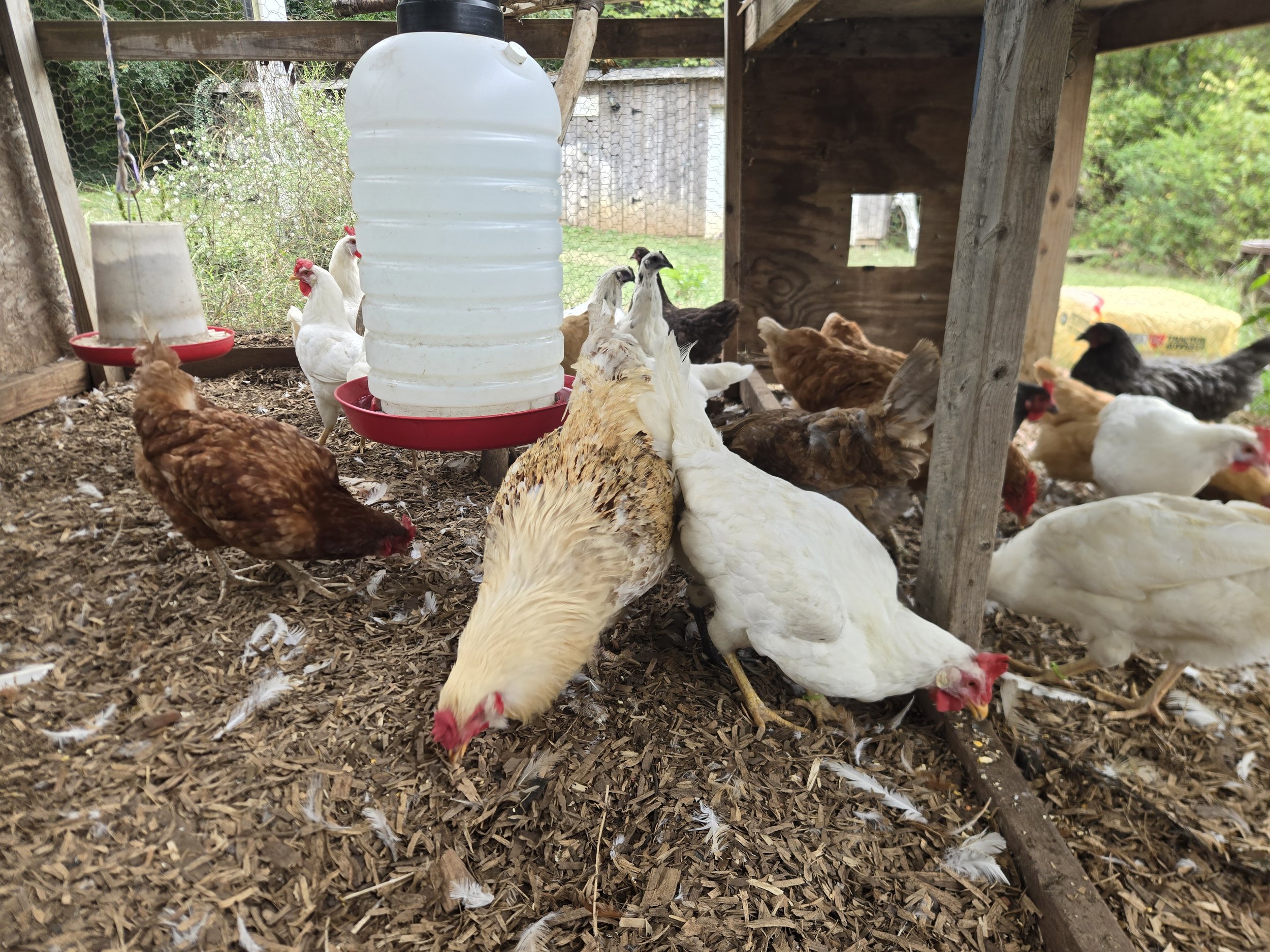
The good news? Chickens are surprisingly tough little critters. With a dry coop, good ventilation, plenty of food and unfrozen water, most healthy birds can handle cold weather quite well.
The trick isn't turning the coop into a tropical resort. It's keeping your flock dry, comfortable and protected from the wind.
So before the first real cold snap rolls through, let's get that coop ready!
Start With a Hardy Flock
Some chicken breeds are simply better equipped for cold weather than others.
Generally speaking, larger, cold-hardy breeds with smaller combs tend to handle chilly weather particularly well. Breeds commonly known for cold tolerance include:
Ameraucanas
Australorps
Brahmas
Buff Orpingtons
Cochins
Delawares
Dominiques
Langshans
New Hampshires
Plymouth Rocks
Rhode Island Reds
Speckled Sussex
Wyandottes
Of course, breed isn't everything. A healthy chicken with a good coop and plenty of food can handle cold weather much better than a chicken living in a damp, drafty shelter regardless of its breed.
The Golden Rule: Cold + dry = manageable. Cold + wet + drafty = trouble.
Give Your Coop a Winter Checkup
Before winter arrives, take a walk around the coop and look for anything that needs attention.
Check the:
Roof for leaks
Walls for large gaps
Doors for proper closure
Windows and screens
Roosting areas
Flooring
Bedding
Ventilation
Your chickens need protection from wind, rain and snow, but that doesn't mean the coop should be sealed up like a submarine.
In fact, one of the biggest winter mistakes chicken keepers make is closing the coop up too tightly.
Don't Seal Up the Coop!
Chickens produce moisture simply by breathing and through their droppings. If that moisture can't escape, humidity can build up inside the coop.
That creates an uncomfortable environment and can contribute to frostbite and respiratory problems, particularly when ammonia from droppings accumulates.
Instead, aim for good ventilation without creating a direct draft across the birds' roosting area.
Ventilation near the upper portion of the coop is particularly useful because warm, moist air can escape while your chickens remain protected from direct wind.
Keep Their Feet and Bedding Dry!
If there's one thing chickens hate about winter, it's a wet home.
Wet bedding can quickly become dirty, smelly and unhealthy, so check it regularly and replace it when necessary.
A nice layer of dry bedding gives your flock a comfortable place to scratch, dust-bathe and settle down for the night.
And don't forget the floor and roof. A little rainwater leaking into the coop might not seem like much in October, but once temperatures drop, that same moisture can become a major problem.
Before winter arrives, fix those leaks!
Don't Forget the Dinner Table
Cold weather means your chickens have to work a little harder to keep themselves warm.
Make sure they have consistent access to a complete, nutritionally balanced poultry feed and plenty of clean water.
Your flock may also spend less time outside during nasty weather, so keeping feed available becomes even more important.
And remember: water is just as important as feed.
A frozen waterer isn't doing anybody much good.
Check your water several times a day during freezing weather and break up ice as needed.
Heated poultry waterers can also make winter chores considerably easier but always use equipment designed for poultry and follow the manufacturer's safety instructions.
Where Did All the Eggs Go?
If your hens suddenly stop laying in the fall, don't immediately assume something has gone terribly wrong.
Fall is molt season for many chickens. During a molt, hens put a tremendous amount of energy into growing new feathers, and egg production can slow dramatically or stop temporarily.
Then there's the other culprit, shorter days.
Chickens naturally respond to changes in daylight, and shorter winter days commonly mean fewer eggs.
If you decide to use supplemental lighting, introduce it carefully and use a timer so your flock receives a consistent schedule. More light isn't necessarily better, and chickens need adequate darkness for normal rest.
For many backyard keepers, accepting a seasonal slowdown is perfectly reasonable.
Sometimes your hens deserve a winter vacation, too!