Canadian Wildfire Smoke Brings Hazy Skies to Davidson County
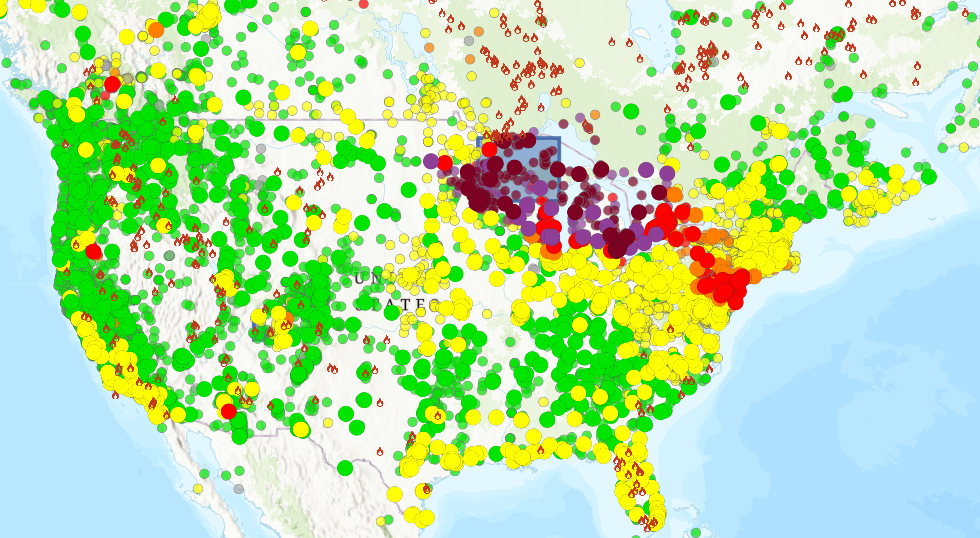
For more air quality info, track AirNow Fire and Smoke Map
Residents across Davidson County may notice milky skies, colorful sunrises and sunsets, and reduced visibility as smoke from wildfires burning hundreds of miles away in Canada drifts into North Carolina.
The National Weather Service says much of the smoke is expected to remain high in the atmosphere, but changing weather patterns could allow some of it to mix closer to the ground, temporarily affecting air quality.
People with asthma, COPD, heart disease, or other respiratory conditions may experience irritation or difficulty breathing if smoke concentrations increase. Young children, older adults, and anyone who works outdoors should also pay attention to local air quality conditions.
According to the National Interagency Fire Center, as of July 15, firefighters were battling more than 48 large uncontained wildfires across the United States. Four new large fires were reported this week, and nearly 686,370 acres have burned so far this season.
The largest concentrations of wildfires are currently burning in Alaska, Colorado, California, and Minnesota. North Carolina has also reported two wildfires this week, though those fires are not the source of the haze expected across Davidson County.
Instead, the smoke is traveling from large wildfires burning across parts of Canada, particularly Ontario, where persistent fires have sent smoke into the upper atmosphere. Winds have carried that smoke across the Great Lakes, the Mid-Atlantic, and into the Carolinas.
While Davidson County is not under an air quality alert at this time, residents who are sensitive to smoke should consider limiting prolonged outdoor activity if the haze becomes thicker. Keeping windows closed, using air conditioning with clean filters, and checking daily air quality forecasts can help reduce exposure.
Although the smoke is coming from fires more than a thousand miles away, its effects can still be seen across Davidson County. Weather experts encourage residents to stay informed by checking daily forecasts and air quality reports, particularly if they have underlying health conditions or plan to spend extended time outdoors.